



CCKAR
CCKAR (cholecystokinin A receptor, CCK1R) is a class A G protein-coupled receptor that preferentially recognizes sulfated cholecystokinin peptides and functions as a major physiological regulator of pancreatic enzyme secretion, gallbladder contraction, gastrointestinal motility, and satiety signaling[1]. Mechanistically, CCKAR primarily couples to Gq-dependent signaling pathways, linking nutrient-derived cholecystokinin release to digestive and metabolic responses across the gastrointestinal tract and peripheral nervous system[1][2]. In experimental and disease-related contexts, CCKAR has been associated with lipid absorption, glucose and energy metabolism, obesity, diabetes, metabolic syndrome, and cholesterol gallstone disease, making the receptor a relevant target for studies of gastrointestinal and metabolic regulation[2]. Compared with the related isoform CCKBR (CCK2R), which is enriched in the central nervous system and displays high affinity for both gastrin and cholecystokinin peptides, CCKAR is predominantly localized in peripheral digestive tissues and exhibits a marked preference for sulfated CCK ligands[1][3][4]. This distinction underlies their different physiological functions, with CCKAR primarily mediating digestive and satiety responses, whereas CCKBR contributes more prominently to neurotransmission, anxiety-related behaviors, memory processes, and gastrin signaling[1][3][4]. For experimental applications, selective CCKAR agonists and antagonists have been widely used to investigate receptor-mediated control of gastrointestinal secretion, gallbladder function, feeding behavior, and metabolic homeostasis[1][4].
References:
- [1]. Wikipedia. Cholecystokinin_A_receptor.
- [2]. Wikipedia. Cholecystokinin_receptor.
- [3]. Tinoco AB, et al. Two cholecystokinin receptor subtypes are identified in goldfish, being the CCKAR involved in the regulation of intestinal motility. Comp Biochem Physiol A Mol Integr Physiol. 2015 Sep;187:193-201. [Content Brief]
- [4]. Wang HH, et al. An Update on the Lithogenic Mechanisms of Cholecystokinin a Receptor (CCKAR), an Important Gallstone Gene for Lith13. Genes (Basel). 2020 Nov 29;11(12):1438. [Content Brief]
- [5]. Wan Y, et al. Cholecystokinin (CCK) and its receptors (CCK1R and CCK2R) in chickens: functional analysis and tissue expression. Poult Sci. 2023 Jan;102(1):102273. [Content Brief]
All Product Categories
-
CCKAR Related Products (10)
Related Products (10)

-
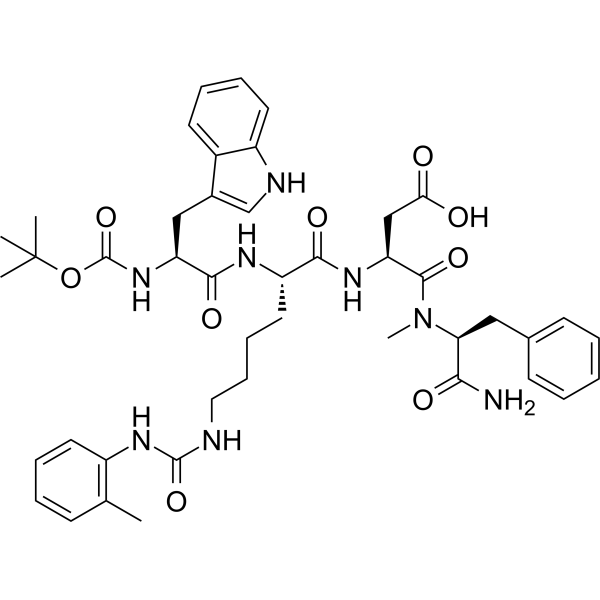
SR 146131
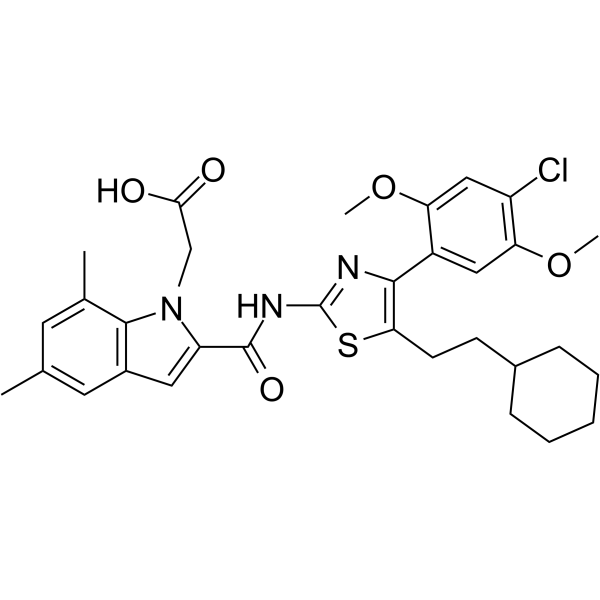 0 ImagesSR 146131 is a potent, orally available, and selective nonpeptide (cholecystokinin 1) receptor agonist.
-
Dexloxiglumide
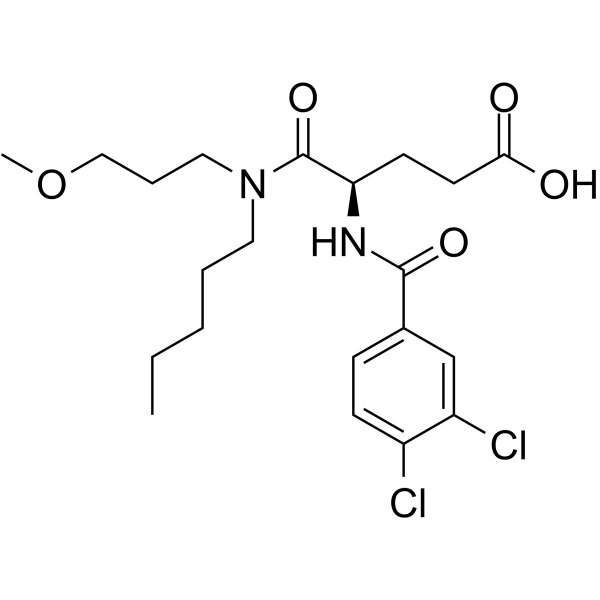 0 ImagesDexloxiglumide is an orally active and selective cholecystokinin type A (CCKA) receptor antagonist. Dexloxiglumide is the active enantiomer of Loxiglumide, inhibits smooth muscle cell contractions induced by cholecystokinin-octapeptide (CCK-8). Dexloxiglumide exhibits moderate Caco-2 permeability that is polarized, concentration dependent, and pH dependent. Dexloxiglumide increases MRP1-substrate fluorescein uptake. Dexloxiglumide can be studied in research for gastrointestinal diseases and tumors.
-
Lintitript
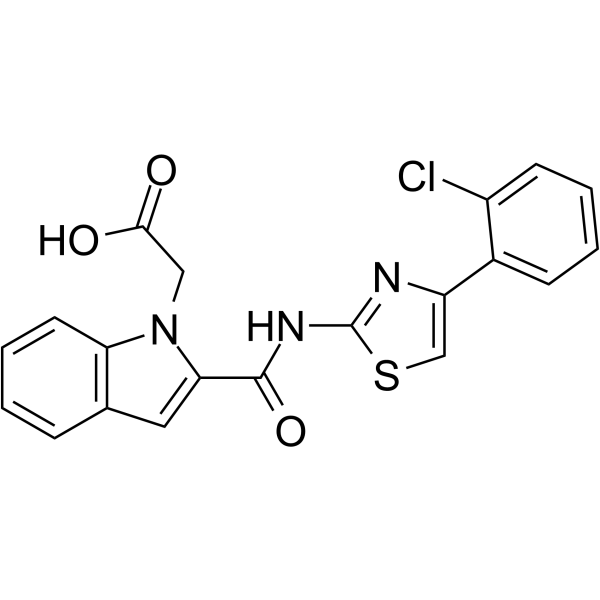 0 ImagesSynonyms: SR 27897Lintitript (SR 27897) is a highly potent, selective, orally active, competitive and non-peptide cholecystokinin (CCK1) receptor antagonist with an EC50 of 6 nM and a Ki of 0.2 nM. Lintitript displays > 33-fold selectivity more selective for CCK1 than CCK2 receptors (EC50 value of 200 nM). Lintitript increases plasma concentration of leptin and food intake as well as plasma concentration of insulin.
-
Loxiglumide
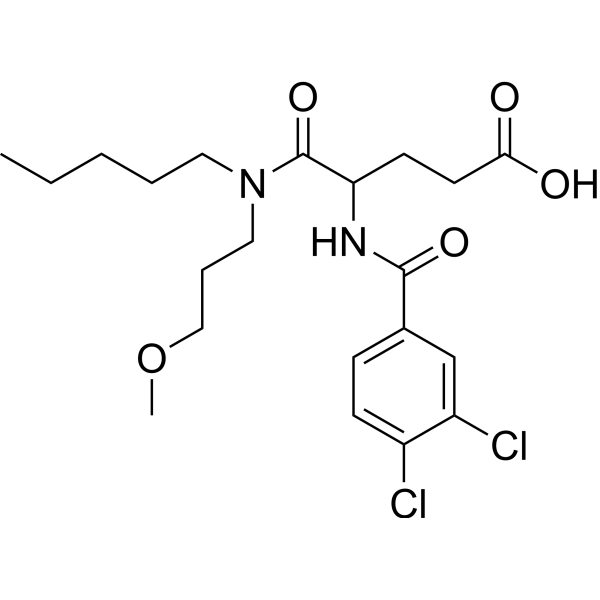 0 ImagesSynonyms: CR-1505Loxiglumide is a cholecystokinin (CCK-1) receptor antagonist.
-
Pranazepide
 0 ImagesSynonyms: FR120480Pranazepide (FR120480) is a selective cholecystokinin-1 receptor (CCK1-R) antagonist with an IC50 of 0.67 nM against CCK1-R. Pranazepide is applicable for the research of pancreatic diseases.
-
PD 135158
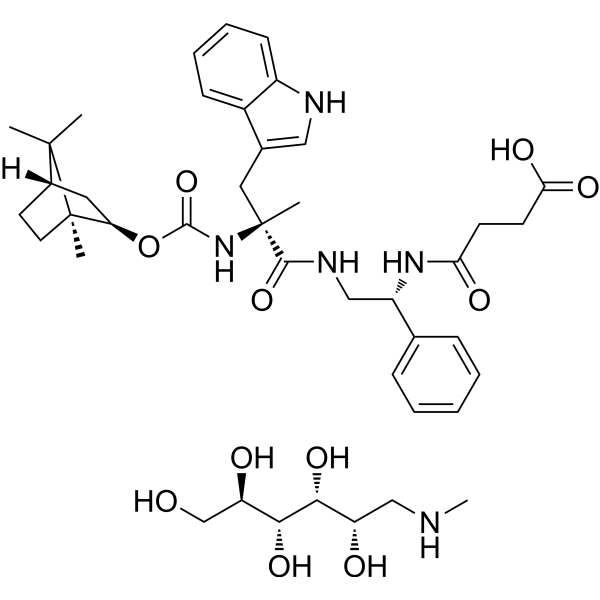 0 ImagesCat. No.: HY-129810CAS No.: 130325-35-8Synonyms: CAM 1028PD 135158 (CAM 1028) is a selective CCKB receptor antagonist with an IC50 of 2.8 nM against mouse cortex CCKB. PD 135158 shows anxiolytic activity.
-
CHEMBL333994
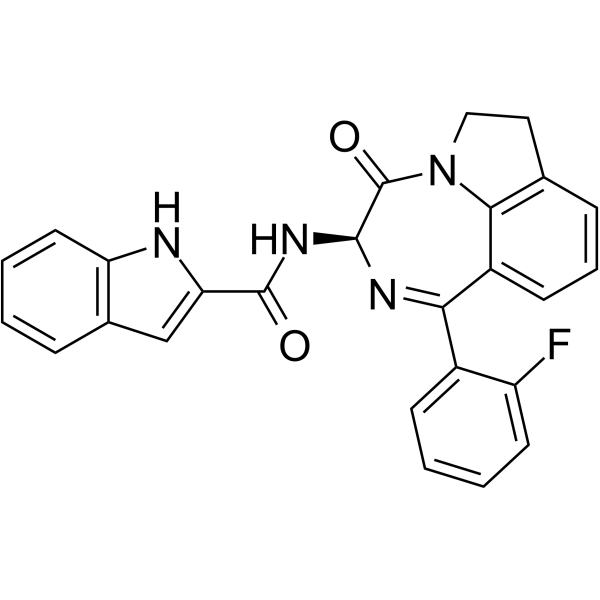 0 ImagesCat. No.: HY-U00363CAS No.: 167820-10-2Synonyms: FK-480CHEMBL333994 (FK-480) is a potent and orally active Cholecystokinin A receptor (CCK-A receptor) antagonist, with an IC50 of 0.67 nM. CHEMBL333994 selectively antagonizes peripheral CCK receptors. CHEMBL333994 increases CCK mRNA level. CHEMBL333994 can be used for research of chronic pancreatitis.
-
PD-149164
 0 ImagesCat. No.: HY-123434CAS No.: 181941-32-2PD-149164 is a potent agonist of cholecystokinin B (CCK-B) receptor, with IC50 values of 0.083 nM and 75 nM in binding assay to CCK-B and CCK-A.
-
TP-680
 0 ImagesCat. No.: HY-119127CAS No.: 176915-07-4TP-680 is a cholecystokinin receptor antagonist. TP-680 binds 1510 times more strongly to rat pancreatic CCKA receptors (IC50=1.2 nM) than to rat brain CCKB receptors (IC50=1812.5 nM). TP-680 can be used in the study of gastrointestinal diseases.



